Designing for Efficiency: Why Smarter Layouts Outperform Bigger Homes
Introduction
In residential real estate, size has long been associated with value. Larger homes are often perceived as more desirable, offering greater comfort and status. However, as urban densities increase and lifestyles evolve, this assumption is being re-evaluated through a more scientific lens.
Today, architects and developers are increasingly focusing on efficiency of space rather than sheer scale, designing homes that perform better in terms of usability, environmental response, and long-term livability. Global housing trends suggest that how a home is designed matters as much as, if not more than, how large it is.
The Myth of Size in Residential Value
A larger home does not automatically translate to better living; poorly planned layouts often result in:
Underutilized or “dead” spaces
Reduced access to natural light and ventilation
Compromised privacy between functional areas
According to the Royal Institute of British Architects (RIBA), well-designed smaller homes can significantly outperform larger ones when it comes to usability and comfort, particularly in high-density urban environments. This brings into focus the idea of “efficiency and usable spaces”, the proportion of a home that is truly functional and actively used, versus the often misleading perception created by super built-up area of a home.
The Science of Spatial Planning
At its core, efficient residential design is not about adding space, but about structuring it intelligently. Spatial planning determines how a home is experienced—how people move, interact, and find comfort within it.
Zoning, Flow, and Privacy Gradients
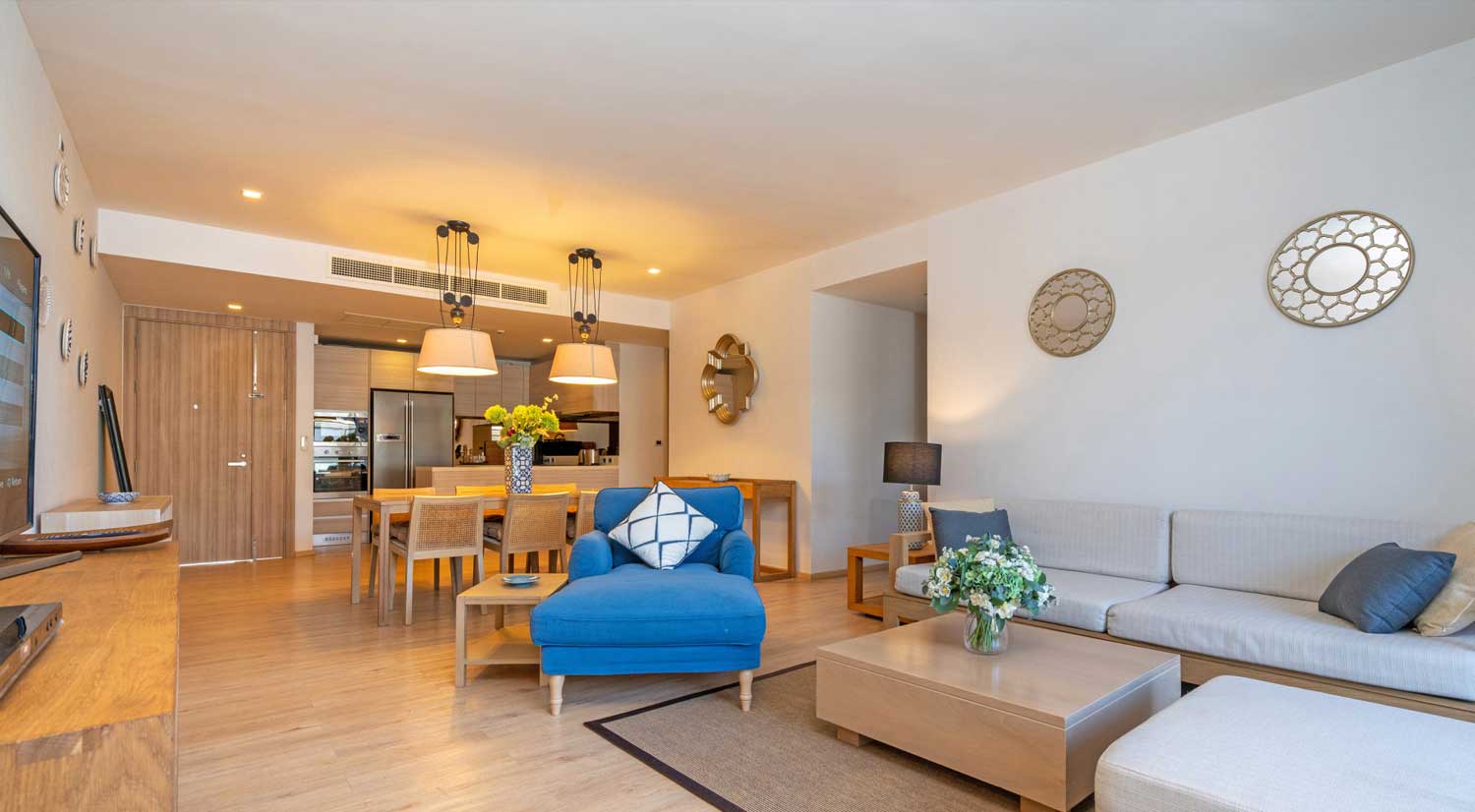
A well-planned home can be organized into clearly defined zones that transition seamlessly into one another. This improves both usability and privacy.
Public zones (living, dining) are designed for openness and interaction
Private zones (bedrooms) are positioned for quiet and separation
Service areas (kitchen, utilities) are efficient yet discreetly integrated
At its core, efficient design is rooted in spatial planning principles that balance function and proportion.
Proportion, Usability, and Furniture Logic
Efficiency is also about how well a space accommodates real-life use, not just how large it is.
Well-proportioned rooms:
Allow flexible furniture placement
Avoid narrow or irregular shapes
Support multiple functions without feeling cramped
For example, a slightly smaller room with the right width-to-length ratio can feel significantly more usable than a larger but awkwardly shaped one.
This is where design shifts from square footage to usability per square foot.
Long-Term Value of Smarter Layouts
From an investment perspective, efficient homes tend to deliver stronger long-term value because they:
Appeal to a wider range of buyers
Adapt better to changing lifestyle needs
Age better in terms of usability and accommodate growing families
As urban land becomes more constrained, efficiency-driven design is emerging as a key differentiator in premium residential development.
The MSR Approach
MSR Infraa moves beyond conventional metrics like super built-up area, focusing instead on how effectively a home performs every day. By integrating design thinking and user-centric planning, the goal is to create homes that are not only efficient on paper, but intuitively better to live in over the long term.
This invloves:
Iterate floor plans multiple times before freezing them
Testing layouts against real movement, practicality, comfort, privacy, and everyday habits
Key Takeaways
Bigger does not mean better, the true value of a home lies in how efficiently space is planned and used, not just total square footage.
Good layouts eliminate wasted space by optimizing flow, zoning, and proportions, making even compact homes feel more functional and comfortable.
Smarter layouts create long-term value by improving usability, adaptability, and appeal in increasingly space-constrained urban environments.